

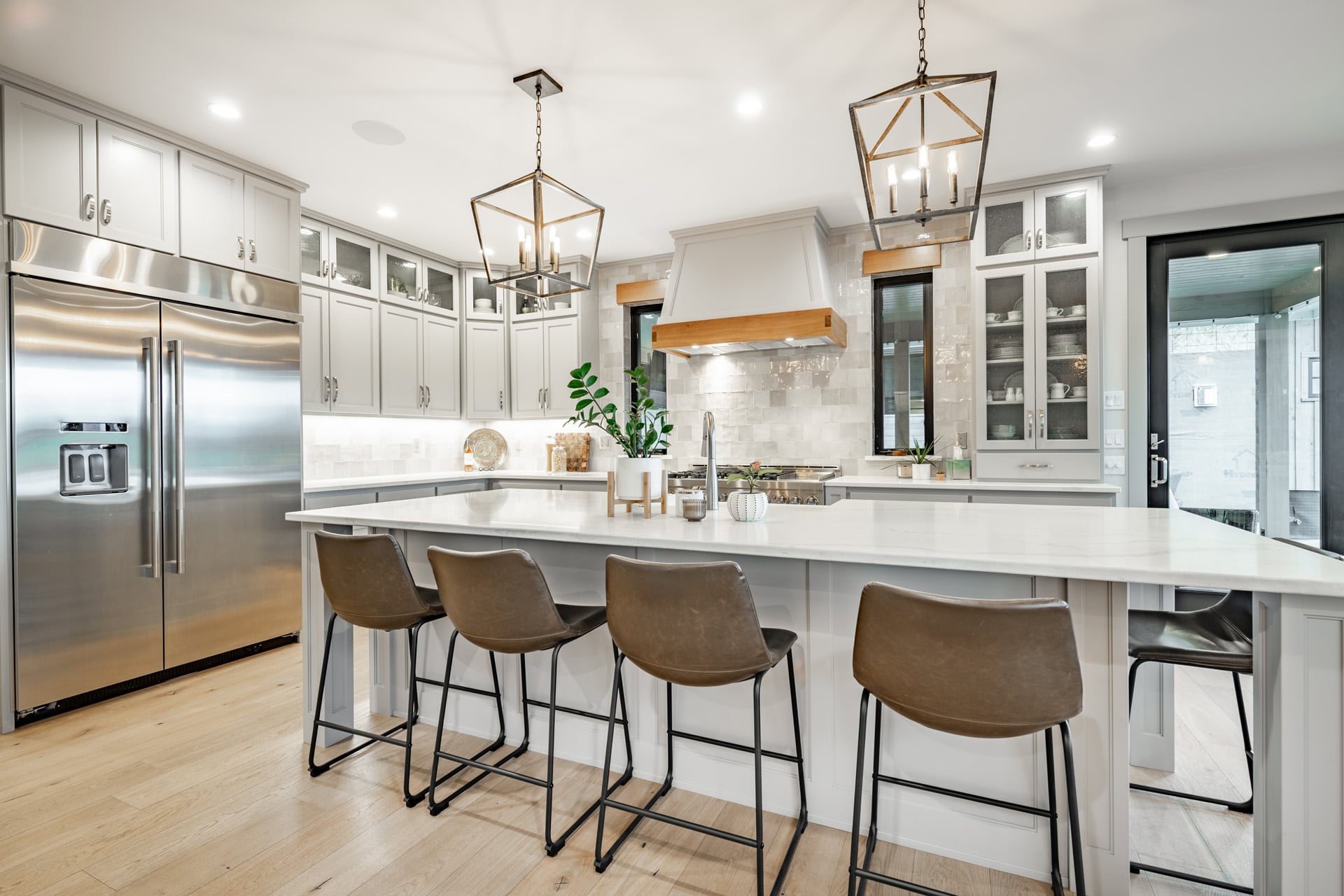
Most People Look at a Home.
We See How It Is Built.
Florida is one of the most demanding residential construction environments in the country. Climate, insurance, flood zones, and hurricane risk make construction quality a financial matter — not just an aesthetic one. This guide teaches you what to know before you buy.
We don't just sell homes - We understand them
At Deluxe Home Group, we believe understanding how a home is built is just as important as where it's located. Our goal is to help buyers look beyond finishes and floorplans to understand the quality, durability, and long-term value of one of life's biggest investments.
1. Roof Systems
- Florida roof age matters enormously for insurability — many carriers will not write new policies on roofs over 15 years old
- Asphalt shingles: most common, adequate when properly installed with wind-rated fastening
- Metal roofing: longer lifespan (40-70 years), superior wind resistance, significant insurance premium advantage
- Tile roofing: durable but heavy — requires engineered roof structure, high replacement cost per tile
- Key visual note: Always evaluate the age label on a roof materials comparison chart.
- Insurance trigger: any roof over 15 years should prompt insurance quote research BEFORE making an offer
- Installation quality matters as much as material — improper nailing pattern causes shingle failure in wind events
2. HVAC Systems
- Florida HVAC systems run nearly year-round — lifespan is shorter than national averages (10-15 years)
- Undersized systems run constantly and fail prematurely — evaluate tonnage against square footage
- Check age, brand, filter access, ductwork condition, and evidence of regular servicing
- SEER rating affects monthly energy costs — higher SEER = more efficient in Florida climate
- Ductwork in attic spaces is common in Florida and a significant heat-gain point — check for proper insulation
- New construction buyers should verify HVAC specs in writing before final walkthrough
3. Windows and Doors
- Impact-rated windows and doors are essential in Florida — they affect both safety and insurance
- Impact windows vs. shutters: impact windows provide continuous protection without requiring action
- Installation quality is as important as product quality — improper installation compromises wind rating
- Look for NFRC labels, Miami-Dade Notice of Acceptance (NOA), or Florida Product Approval numbers
- New construction: verify impact rating specs are in the contract — not just verbally promised
- Resale: look for signs of improper installation — gaps, caulking failure, water intrusion staining
4. Concrete Block Construction (CBS)
- CBS (Concrete Block Structure) is the dominant residential construction method in Florida
- Advantages: superior wind resistance vs. wood frame, pest resistance, reduced fire risk
- Most single-family homes in Gulf Coast communities are CBS on the first floor
- Two-story CBS: first floor block, second floor may be wood frame — verify what you are buying
- Block quality, mortar integrity, and rebar placement all affect structural performance
- CBS does not mean hurricane-proof — roof attachment, window quality, and door ratings still matter
5. ICF Construction — Insulated Concrete Forms
- ICF (Insulated Concrete Forms) combines reinforced concrete with continuous insulation to create an exceptionally strong and durable wall system.
- Superior resistance to hurricanes, flying debris, fire, termites, mold, and rot compared to traditional wood-frame construction.
- Outstanding energy efficiency helps maintain more consistent indoor temperatures and can reduce heating and cooling costs.
- Insulated concrete walls provide exceptional sound reduction, creating a quieter and more comfortable living environment.
- Higher structural performance and durability may contribute to lower maintenance costs and greater long-term resilience.
- While less common than CBS construction in Florida, ICF is widely recognized as one of the strongest and most energy-efficient residential building systems available. We believe this is the future of Florida construction!
6. Flood Zones
- FEMA flood zone designation directly affects insurance cost and mortgage requirements
- Zone X: minimal flood hazard — generally no flood insurance required (but still recommended)
- Zone AE: high flood hazard — flood insurance required for federally backed mortgages
- Zone VE: coastal high-velocity zone — highest risk, highest insurance cost
- Flood zone maps can be found at msc.fema.gov — always verify the specific parcel
- Elevation Certificate: a surveying document that establishes home's elevation relative to base flood elevation — critical for accurate insurance quotes
- Flood zone designations can change — check FEMA Letter of Map Amendment (LOMA) history for property
- New construction in flood zones: check base flood elevation requirements and required first-floor height
7. Insurance Considerations
- Florida homeowner's insurance market is among the most complex in the nation — research early in purchase process
- Get insurance quotes BEFORE making an offer — do not assume insurability
- Key premium factors: roof age/type, construction type, wind mitigation features, flood zone, claims history
- Citizens Property Insurance: state-backed insurer of last resort — available but carries limitations
- Wind mitigation inspection: separate inspection that documents storm-resistant features, often reduces premiums significantly
- Sinkhole coverage: relevant in parts of Florida — verify availability and exclusions
- Recommend working with a local independent insurance agent who specializes in Florida residential
8. Wind Mitigation
- Wind mitigation features reduce insurance premiums — sometimes dramatically
- Key features evaluated: roof shape, roof covering, roof deck attachment, roof-wall connection, opening protection (windows/doors)
- Hip roof vs. gable roof: hip roofs perform significantly better in wind events and earn premium discounts
- Roof-to-wall connections: clips, straps, and hurricane ties are evaluated — more connection points = better rating
- Wind mitigation inspection is separate from standard home inspection — typically $75-150
- New construction: request wind mitigation summary from builder at closing
- Resale: always order a wind mitigation inspection — savings often far exceed inspection cost
9. Craftsmanship Indicators
- Exterior: consistent grading/drainage away from foundation, even roof lines, quality caulking at all penetrations
- Interior finish work: consistent baseboard height, tight corner joints, uniform paint coverage — sloppy finish work signals sloppy framing
- Tile work: consistent grout lines, no lippage (uneven edges), no hollow spots under tile
- Doors and windows: operate smoothly, close and latch without force — misalignment signals settling or poor installation
- Electrical: panel is labeled, outlets are grounded, no double-tapped breakers
- Plumbing: no staining under sinks, consistent water pressure, proper trap configurations
- Attic: visible insulation, no staining (signs of past leaks), proper ventilation, no pest evidence
10. New Construction Quality Checkpoints
- Pre-Construction: Verify builder's license, insurance, and BBB history before signing anything
- Lot Selection: Evaluate drainage, surrounding development, flood zone, and future phases
- Pre-Pour Inspection: Foundation form placement, rebar spacing and depth before concrete is poured
- Pre-Drywall Inspection: Framing, mechanicals (HVAC, plumbing, electrical), insulation, and hurricane strapping
- Final Inspection: Every system, every finish, every item promised in contract — document everything in writing
- Punch List: Written list of all items to be corrected before or within specified post-close window
- Warranty Registration: Register with builder within required timeframe — keep all documentation
11. Resale Home Quality Checkpoints
- Always use a licensed, independent Florida home inspector — never rely on seller's inspection
- Consider specialized inspections: wind mitigation, 4-point (often required for insurance), WDO (termite/pest)
- 4-Point inspection covers: roof, HVAC, electrical, plumbing — required by many Florida insurers on older homes
- Review seller's disclosure carefully — look for water intrusion history, insurance claims, repairs
- Check public records for permit history — unpermitted work creates future liability for the buyer
- Verify flood zone on the specific parcel — not the neighborhood generally
- Older homes (pre-2002): evaluate for knob-and-tube wiring, galvanized pipes, and original roof — all affect insurability